
The Biblical roots of Alcoholics Anonymous are not a theory — they are a documented historical fact. A.A.'s earliest members met for Bible study, prayer, and quiet time before the Twelve Steps were ever written, and the program they built carried the fingerprints of Scripture from its first day. This page exists to put that evidence back in your hands.
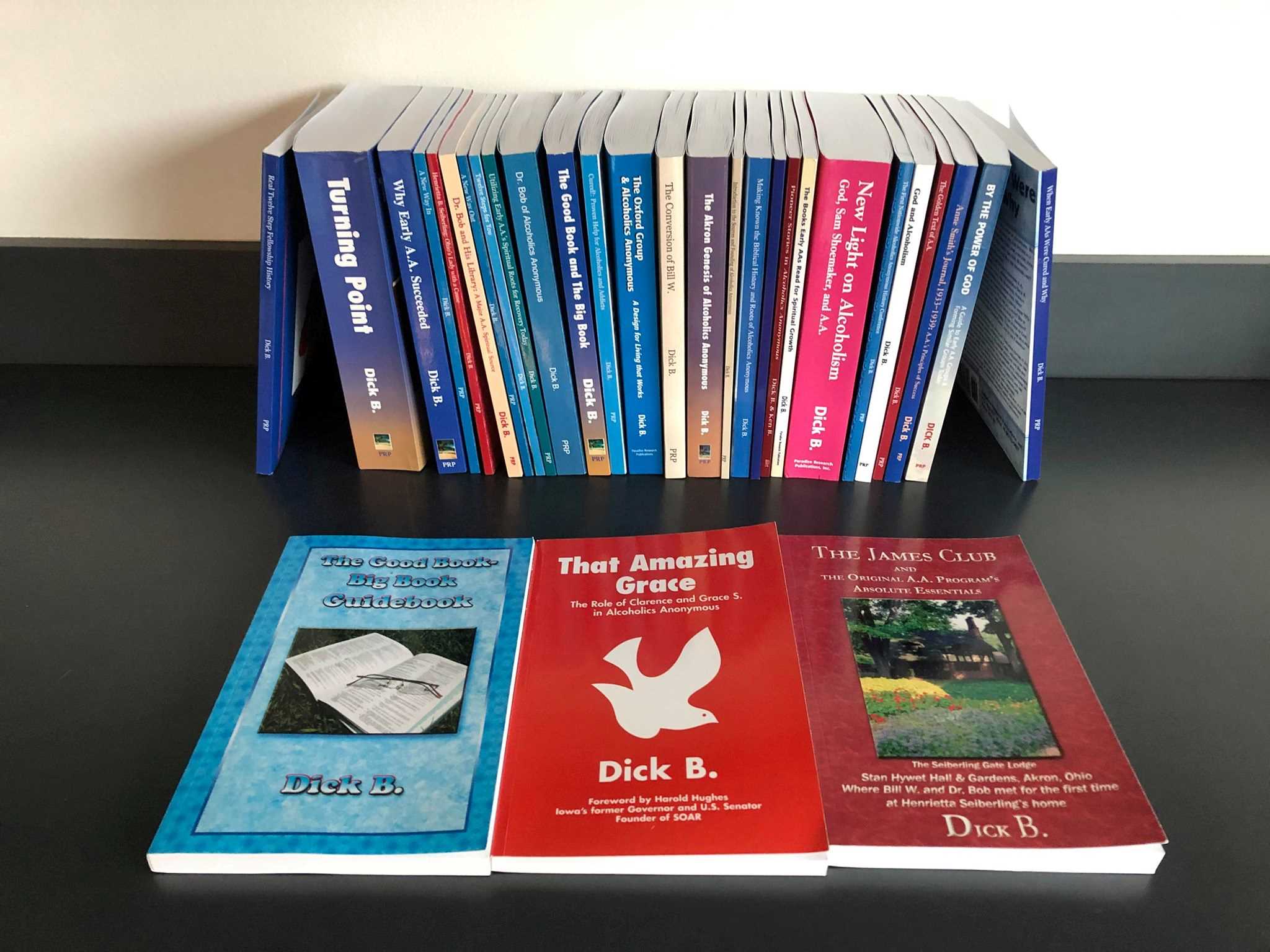
The Dick B. A.A. History Reference Set is the Christian recovery world's permanent, irreplaceable record of the roles God, His Son Jesus Christ, and the Bible played in early A.A.'s astonishing successes — and the most powerful resource for every Christian recovery worker today.
Dick B. (J.D., CDAAC) — Stanford-educated attorney, recognized as "the unofficial historian of Alcoholics Anonymous." 25 years of forensic research. 45 published titles. 1,750+ published articles. 200+ recorded audio talks. Many videos and video series.
What the Founders Actually Read, Prayed, and Practiced
Long before A.A. had a Big Book, it had a Bible. Bill W., Dr. Bob, and the early AAs drew their working principles from the Sermon on the Mount (Matthew 5–7), First Corinthians 13, and the Book of James. Dr. Bob called those three passages "absolutely essential" to early recovery. If you are a Christian recovery program director trying to show your participants where the Twelve Steps come from, the historical record is the strongest tool you have — and it has been hiding in plain sight.
A First Century Christian Fellowship, founded in the autumn of 1922 — later also known as of September 1928 as "the Oxford Group" — taught surrender to God, restitution, confession, and service to others. Every one of those practices found its way into the Twelve Steps, but stripped of the explicit Scripture references that originally anchored them. For a chaplain walking alongside men and women in jails, hospitals, or treatment centers, the ability to point to the original Biblical language behind each Step is not academic — it changes the conversation from "spiritual principles" to "the living Word of God."
BUY NOW — $297 + FREE U.S. SHIPPING
30-Day Money-Back Guarantee · Cards accepted, no PayPal account required
This matters for the pulpit, too. Most congregations include people in active addiction, in recovery, or loving someone who is. A pastor who can preach the Biblical foundation of the Twelve Steps speaks directly into that pain with both compassion and authority — without having to choose between honoring Scripture and honoring the very real fruit A.A. has produced for nearly a century.
And for the classroom: a seminary teacher training the next generation of pastors, counselors, and missionaries needs primary sources, not summaries. The documented connections between A.A. and the early church — the influence of Dr. Samuel Shoemaker, the role of the Akron Christian fellowship, the way the Twelve Steps echo Psalm 51, Romans 7, and 1 John 1 — belong in any course on pastoral care, addiction, or practical theology.
Why This History Has Been Forgotten
As A.A. grew, its Christian roots were intentionally softened so that anyone of any belief could walk through the door. That softening saved some from their alcoholism. But it also meant that within a generation, most members — and most pastors — had no idea the program was born in Bible study. The result is a strange split: a recovery movement that works, and a Church that often does not realize the movement actually came from the same Biblical foundation on which Christianity itself was built.
The Dick B. A.A. History Reference Set closes that gap. It walks Step by Step through the Scripture the founders actually used, names the Christian leaders who helped shape the program, and gives you the citations, dates, and source documents to back every claim.
The Bible Passages Early A.A. Considered Essential
When Alcoholics Anonymous began in Akron in 1935, its first members did not work from a printed set of steps — those came later. They worked from the Bible. The documented record that Dick B. spent decades assembling shows that three portions of Scripture stood at the center of the early program: the Book of James, Jesus’ Sermon on the Mount (Matthew 5 through 7), and Paul’s description of love in 1 Corinthians 13. Early A.A. treated these passages as absolutely essential to recovery.
The Book of James — with its insistence that faith without works is dead — was so central that the first members seriously considered calling their fellowship “the James Club.” Its themes of humility, confession, patience under trial, and caring for others run straight through what later became the Twelve Steps. You can read the fuller story on our page about the Book of James and A.A.
The Sermon on the Mount supplied the program’s moral compass, and 1 Corinthians 13 supplied its picture of the changed, love-centered life the founders were reaching for. Together with the leadership of Bill W. and Dr. Bob, these texts formed the spiritual backbone of the earliest meetings.
Bible Study, Quiet Time, and the Oxford Group
The Biblical roots of Alcoholics Anonymous were lived out through daily practice, not theory. Early members gathered for Bible study, kept a morning “quiet time” of prayer and listening, made honest confession, and set about restitution and service to others. Anne Smith, Dr. Bob’s wife, kept a spiritual journal she used to guide newcomers — one of the most direct windows we have into what early A.A. actually taught.
Much of this practice reached A.A. through the Oxford Group, the Christian fellowship both founders belonged to before A.A. became its own movement. The Oxford Group’s emphasis on surrender, self-examination, confession, restitution, and helping others shaped the habits the first members carried into their new work.
What the Documented Record Shows
These were not vague spiritual gestures. Among the alcoholics who thoroughly followed this Bible-based program, early A.A. reported success rates of roughly 75 to 93 percent — figures far beyond what is common today. The complete primary-source history behind these accounts is collected in the Dick B. A.A. History Reference Set; if you are new to this material, start with what the Reference Set is.
How the Biblical Roots of Alcoholics Anonymous Shaped the Twelve Steps
Once you see the biblical roots of Alcoholics Anonymous, the Twelve Steps read differently. The admission of powerlessness and the decision to turn one’s will and life over to God echo the surrender the founders first learned through Scripture and the Oxford Group. The searching moral inventory and confession of Steps 4 and 5 mirror the honest self-examination the Book of James and the Sermon on the Mount call for. Making amends in Steps 8 and 9 restates the restitution the earliest members practiced, and carrying the message in Step 12 is the servant-hearted love of 1 Corinthians 13 put to work one day at a time.
The founders never hid where the program came from. Dr. Bob said plainly that the Sermon on the Mount carried the underlying spiritual message of the fellowship, and the first members read and studied their Bibles together in Akron before a single one of the Twelve Steps had been written down. Anne Smith opened her home and her spiritual journal to newcomers; quiet time, prayer, and Bible study were the daily disciplines that carried people through early sobriety.
This is why recovering the biblical roots of Alcoholics Anonymous matters today. When the Steps are traced back to their sources — James, the Sermon on the Mount, and the love chapter of 1 Corinthians — they stop being abstract slogans and become a coherent, Scripture-anchored path that early A.A. documented at success rates of 75 to 93 percent. The record is not a matter of opinion; it is preserved in A.A.’s own literature and in the primary sources this ministry has spent decades gathering.
Is The Dick B. A.A. History Reference Set for You?
If you are a Christian recovery program director, chaplain, pastor, or seminary teacher — anyone responsible for guiding others through addiction, suffering, and the path back to God — The Dick B. A.A. History Reference Set was built for you. It will give you the historical evidence, the Scripture references, and the language you need to teach the Biblical roots of Alcoholics Anonymous with clarity and confidence.
If that's you, the next step is simple.
The Dick B. A.A. History Reference Set — 31 volumes. The Christian recovery world's permanent, irreplaceable record. Available exclusively at DickBonRecovery.com or direct from Ken B.
Secure checkout via PayPal. Credit and debit cards accepted — no PayPal account required. Print-on-demand. Usually ships within 2–5 business days. 30-day satisfaction guarantee.
See also: The Dick B. A.A. History Reference Set — 31 volumes documenting the Biblical and Christian foundations of early A.A.